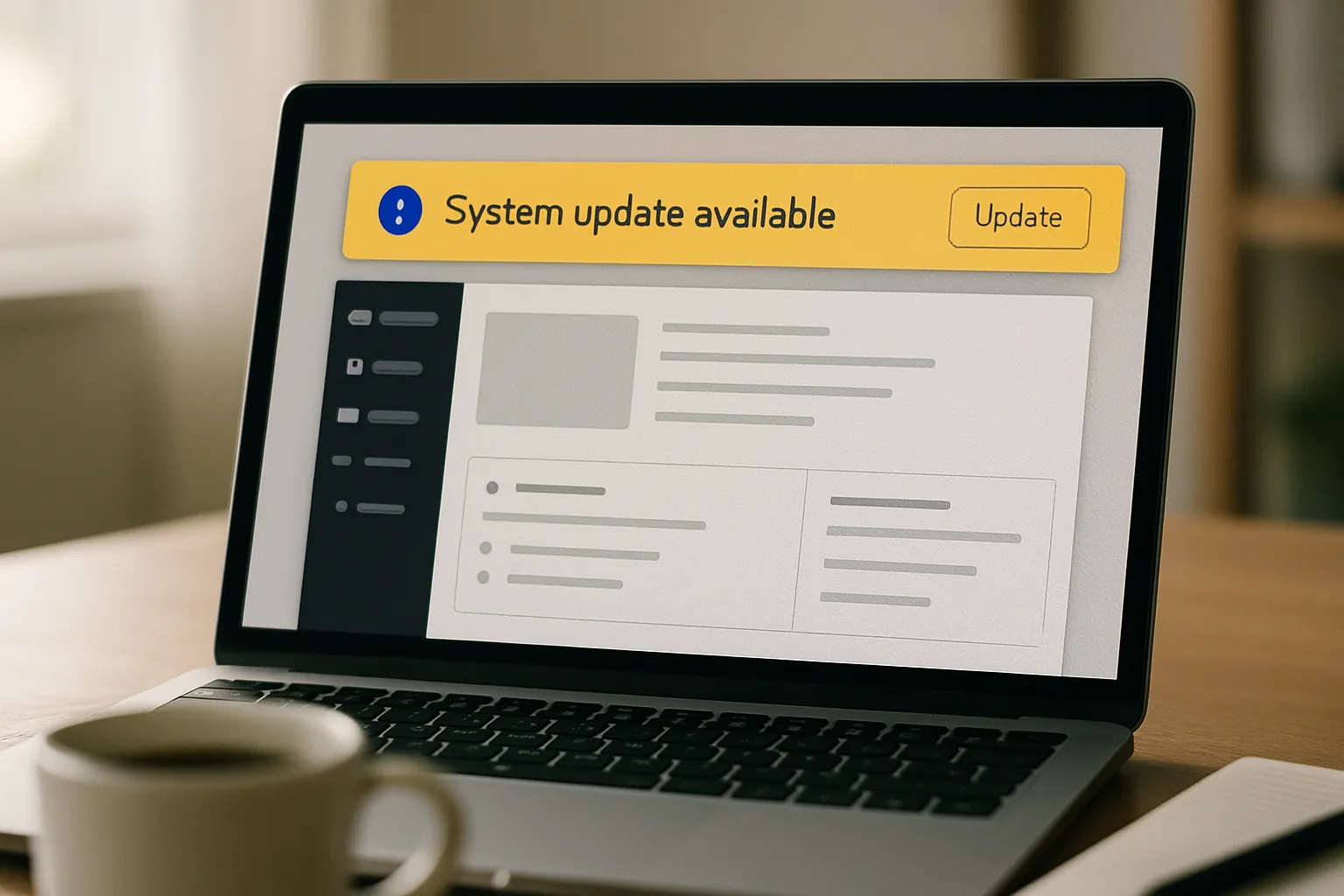
When the importer finishes, the user doesn't land on a wall of classified rows — they land on their new quote with a short AI-generated banner above the items table.
This is a deliberate UX decision. Most AI import tools dump the user into a spreadsheet of classified rows and expect them to figure out what needs attention. The user scans 20 rows, checks 5 that look suspicious, re-checks 3 that were probably fine, and spends 15 minutes orienting themselves before they begin actual review. The banner short-circuits that orientation phase by answering the only question the user actually has at that moment: 'What do I need to look at?'
What the banner says Something like: 'Imported 14 lines. 11 matched cleanly, 2 need your review, and 1 couldn't be matched — please check line 9.' One or two sentences, locale-appropriate, dismissible.
The banner is generated by a focused LLM call that receives only the classification counts and the user's locale. It doesn't see product names, prices, or customer data. It receives '14 total, 11 exact, 2 AI, 1 not found' and produces a natural-language summary. The output is constrained to two sentences maximum — if the model gets verbose, the response is truncated. The goal is orientation, not narration.
Why ephemeral The banner lives only on the post-import view. It's not persisted on the Quote — it comes back inline in the import response and disappears on navigation. The chips per line are the durable record; the banner is the welcome note.
This ephemerality is intentional. If the banner were persisted, it would become stale the moment the user edits a line. A banner saying '2 need your review' when the user has already reviewed and fixed both is worse than no banner at all — it trains the user to ignore the banner. By confining it to the post-import moment, the banner is always fresh, always accurate, and never misleading.
Tiny call, tiny cost Call C is the smallest of the three AI calls in the importer. It receives only the classification counts and the user's locale; it's a few hundred tokens in, a few dozen out. The cost is negligible; the information value is not.
At current gpt-4.1-mini pricing, the banner call costs roughly $0.0002 per import. Over 10,000 imports, that's $2. The time savings per import — the 30-60 seconds of orientation the user doesn't have to do — is worth orders of magnitude more. This is the kind of AI use case that doesn't make headlines but makes products usable: a tiny, focused call that answers one question well and gets out of the way.